
Missing or creased shingles
Bare patches, torn edges or shingles folded back by wind mean the seal has broken.
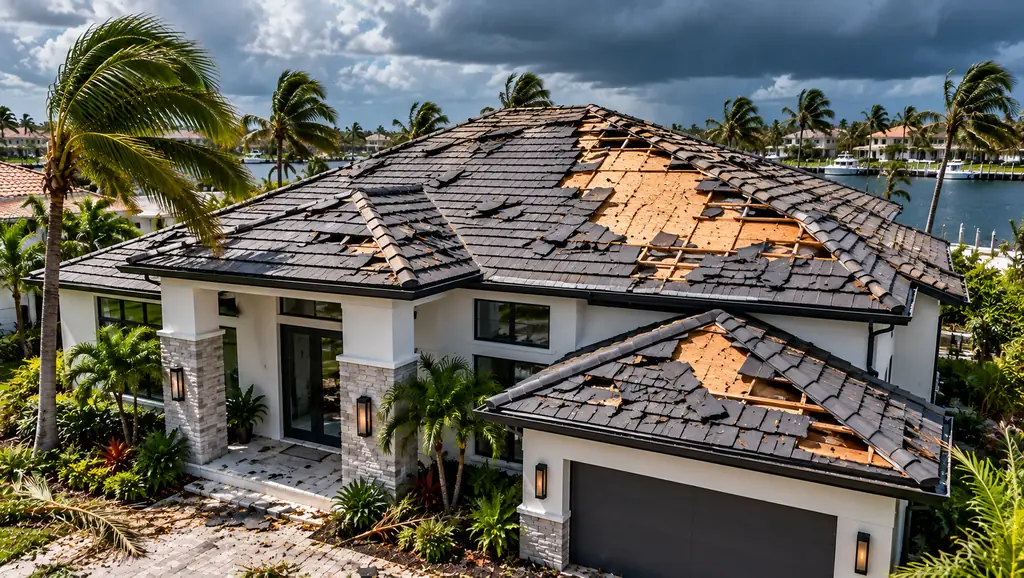
Storm damage? Stay off the roof and call us.
Storm Damage Repair
Wind, flying debris and driving rain can damage a roof in ways you cannot see from the yard. We assess what happened, help protect the roof from further water entry and repair it properly.
General information about Florida’s storm season and building code. Confirm requirements for your property with your local building department.
After a Storm
A calm, step-by-step approach protects your family and your property.
Stay clear of downed power lines, standing water near electrical outlets and sagging ceilings. Do not go onto the roof.
Take date-stamped photos and video of the roof, the yard, any debris and interior water stains or leaks.
Move belongings away from leaks, set out buckets and towels, and keep people out of rooms with bulging ceilings.
We inspect the roof, document what we find with photos and explain what needs attention first.
Report the damage to your insurance company. You can share our photos and written assessment; coverage decisions are theirs.
We provide a written scope for the repair or, if needed, replacement, and pull the required permit.
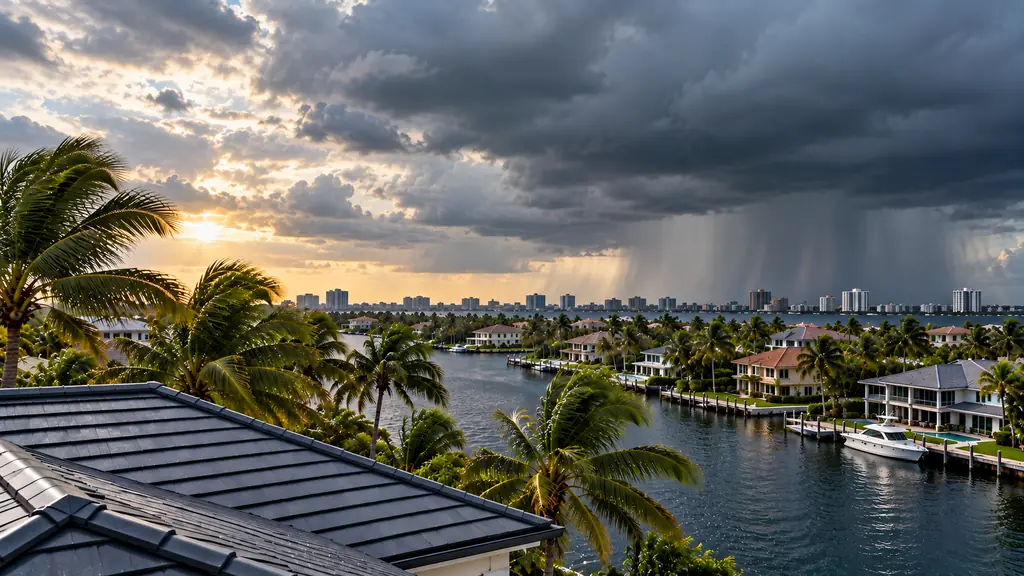
What to Look For
Look from the ground or a window — never from the roof itself.
Bare patches, torn edges or shingles folded back by wind mean the seal has broken.
Broken pieces in the yard or gaps in tile rows can expose the underlayment beneath.
Lifted panel edges, loose trim or bent flashing can let wind-driven rain inside.
Fallen branches and flying objects can puncture roofing and crack the deck below.
Fresh stains or drips after a storm are a sign water has found a way in.
Sagging or detached gutters often mean the roof edge took a beating too.
Documentation
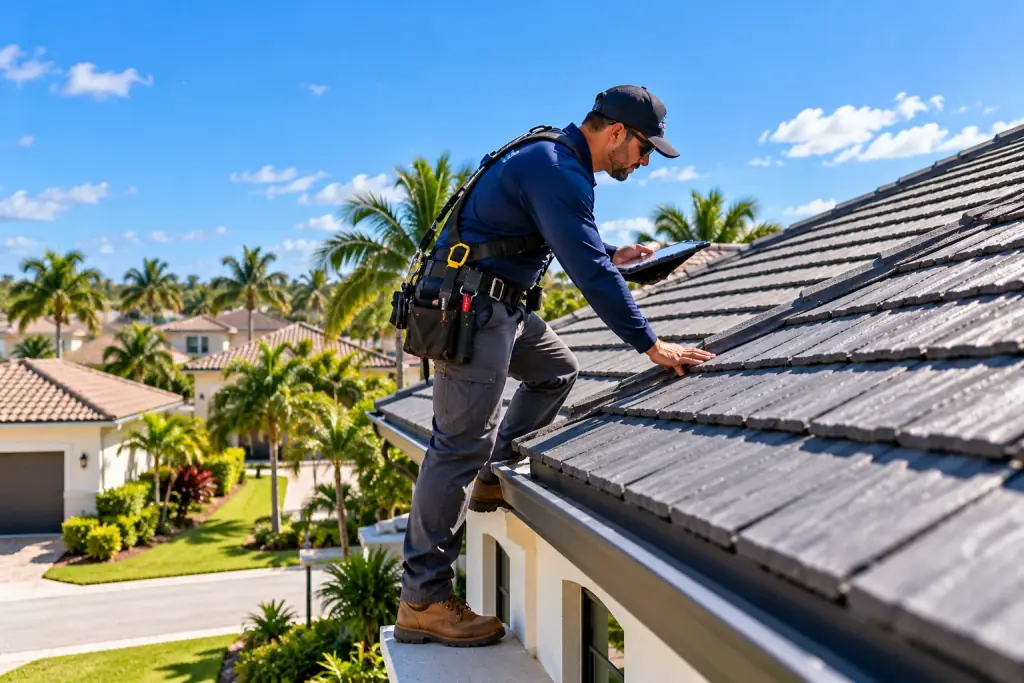
After a storm, good records matter. When we assess your roof, we photograph the damage we find and provide a written assessment describing its location and extent, along with our recommended repair.
You can share that documentation with your insurance company. Please note: we do not handle or negotiate insurance claims, and coverage decisions are between you and your insurer. Our job is to give you an accurate, honest picture of your roof and to repair it properly.
Wet surfaces, loose materials and weakened decking make damaged roofs dangerous. Watch for downed power lines near the house. Take photos from the ground, stay out from under sagging ceilings and let a roofing professional get on the roof.
FAQ
Have a question that isn't answered here?
Call (954) 716-2216As soon as it is safe to do so. Wind can lift shingles and crack tiles without causing an immediate leak, and the next heavy rain can turn that into interior damage. An early assessment helps you catch problems while they are smaller.
Call us as soon as it is safe. We will assess the roof, tell you what needs attention first, and explain your options for limiting further water entry until permanent repairs can be completed.
No. Coverage decisions are between you and your insurance company. What we can do is provide photos and a written assessment of the damage we find, which you can share with your insurer.
Not always. Florida changed its partial-repair rule in 2022: roofs built to the 2007 Florida Building Code or later can generally have the damaged portion repaired to current code without requiring full replacement. Ask us how it applies to your roof.
Take date-stamped photos and video of the roof from the ground, any debris, interior stains or leaks, and damaged belongings. Keep receipts for emergency expenses. Do not climb onto the roof to get photos.
It is usually better not to wait. Hurricane season runs June 1 through November 30, and a damaged roof is more vulnerable to the next storm and to everyday summer rain in between.

Storm Damage
We will assess the damage, help protect your roof from further water entry and explain your repair options clearly.
Enter your info below and our team will reply by text message.
We'll text you back at the number you provided shortly.